Dachshunds are one of the most beloved dog breeds, famous for their long bodies, short legs, and playful personalities. Unfortunately, that same unique body shape makes them more prone to certain spinal issues, especially Intervertebral Disc Disease (IVDD).
As a veterinary rehabilitation team, we often see dachshunds for back-related problems. Understanding why these problems happen and how rehab can help is key to keeping your dachshund comfortable, mobile, and happy.
Why Dachshunds Are at Higher Risk
Dachshunds are part of the chondrodystrophic breeds, meaning their cartilage and bone develop differently. This gives them their adorable short-legged appearance but also makes their intervertebral discs age and degenerate more quickly than other breeds.
- Their long spine places extra stress on the discs.
- Their short limbs limit natural shock absorption when running, jumping, or going up and down stairs.
- About 1 in 4 dachshunds will experience some level of IVDD during their lifetime.
Common Back Problems in Dachshunds
Here are the most common spine and back conditions we see in dachshunds through our rehabilitation practice:
1. Intervertebral Disc Disease (IVDD)
The most common issue, IVDD, occurs when the cushioning discs between the vertebrae bulge (herniate) or rupture. This puts pressure on the spinal cord, causing pain, nerve damage, or even paralysis.
Symptoms to watch for:
- Reluctance to jump, play, or climb stairs
- Shaking or trembling due to pain
- Arched back or tense abdominal muscles
- Knuckling of paws or dragging legs
- Sudden loss of mobility in the hind limbs
Grades of IVDD:
- Mild: Pain only, no nerve involvement
- Moderate: Weakness or unsteady walking (ataxia)
- Severe: Complete paralysis or loss of deep pain sensation
2. Post-Surgical Recovery Challenges
Many dachshunds with IVDD undergo surgery to remove the ruptured disc material.
While surgery can be life-saving, rehabilitation is crucial to help restore:
- Muscle strength and coordination
- Core stability to support the spine
- Nerve function and mobility
- Confidence in movement to prevent re-injury
- Chronic Back Pain and Arthritis
Even without a full disc rupture, dachshunds often develop spinal arthritis as they age. This may show as stiffness, slower movements, or intermittent pain flare-ups. Rehabilitation and maintenance therapy can help keep these dogs active and comfortable.
How Rehabilitation Helps Dachshunds
Veterinary rehabilitation plays a vital role whether your dachshund is recovering from surgery, managing chronic pain, or preventing future injuries.
Some of the most common rehab modalities include:
Physical Therapy & Exercises
- Core strengthening: Improves stability and reduces strain on the spine.
- Balance work: Encourages proper limb placement and coordination.
- Controlled movement training: Walking over poles or on uneven surfaces to retrain nerve pathways.
Hydrotherapy
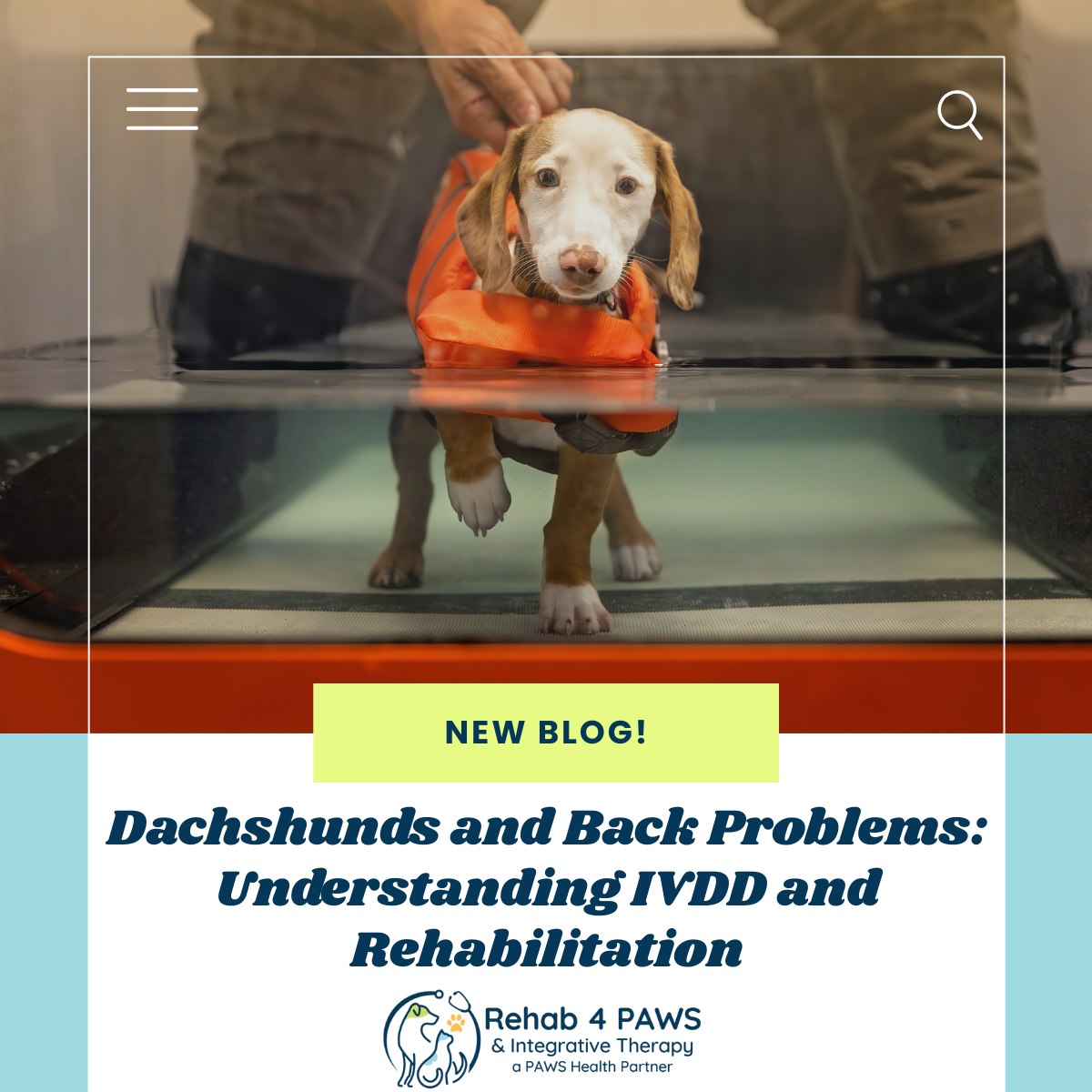
Underwater treadmill therapy allows dachshunds to exercise with minimal joint strain, improving muscle strength and range of motion safely.
Laser Therapy & PEMF
- Reduce inflammation and pain.
- Promote healing of damaged nerves and tissues.
Acupuncture & Integrative Therapies
Support nerve regeneration, pain control, and overall well-being.
Prevention Tips for Dachshund Owners
While not all cases of IVDD can be prevented, certain steps can reduce risk:
- Maintain a healthy weight – extra pounds add stress to the spine.
- Avoid jumping on and off furniture – use ramps or steps.
- Daily low-impact exercise like walking or swimming to keep muscles strong.
- Early intervention – seek veterinary care at the first sign of back pain or unsteady walking.
When to Seek Emergency Care
If your dachshund suddenly can’t walk, drags their back legs, or loses bladder/bowel control, this is a medical emergency.
Prompt veterinary attention and possibly surgery are crucial for the best chance of recovery.
The Role of Ongoing Maintenance
Even after recovery, dachshunds benefit from ongoing rehabilitation.
- Regular check-ins with your rehab vet
- Home exercise programs
- Periodic treatments like laser therapy or acupuncture
- Lifestyle adjustments to protect the spine long-term
Final Thoughts
Dachshunds bring endless joy with their quirky personalities and loving nature, but their unique anatomy means they need extra care when it comes to back health. With early detection, proper veterinary care, and targeted rehabilitation, many dachshunds with IVDD or other spinal problems go on to live active, fulfilling lives.
If you notice changes in your dachshund’s movement or behavior, don’t wait — schedule a visit with your veterinarian or a veterinary rehabilitation specialist. The sooner we intervene, the better the outcome!


0 Comments