
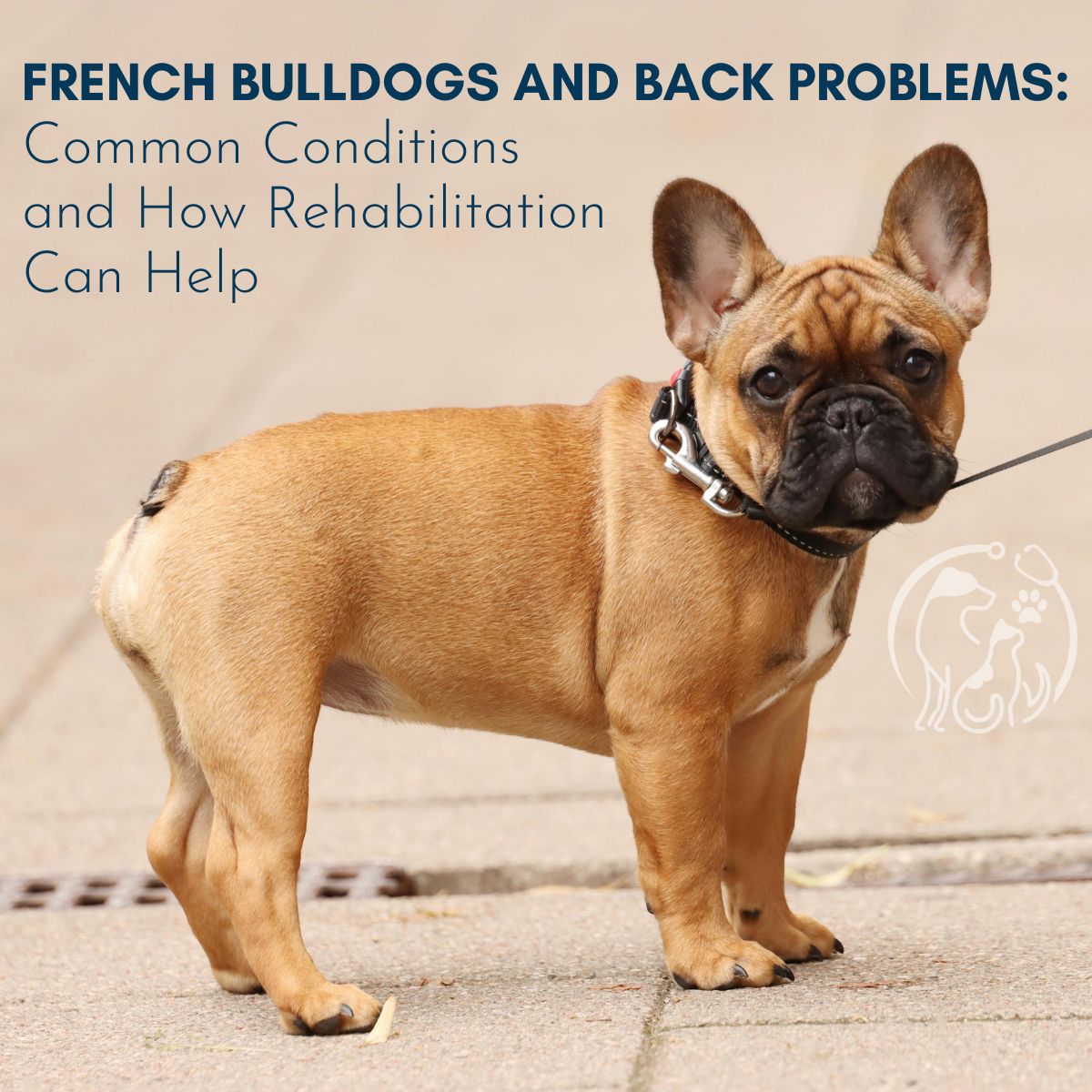
French Bulldogs are beloved for their affectionate personalities, adorable bat ears, and playful nature. However, their unique body structure makes them prone to certain spinal and neurological issues that can affect their mobility and quality of life. Understanding these conditions and how veterinary rehabilitation can help is essential for keeping your Frenchie happy and healthy.
Why French Bulldogs Are at Risk
French Bulldogs are chondrodystrophic, meaning they have shortened, curved legs and a long spine compared to their body size. This skeletal structure, combined with their compact build, predisposes them to intervertebral disc disease (IVDD) and other spine-related conditions.
These back problems can occur at any age.
Common Back Problems Seen in French Bulldogs
1. Intervertebral Disc Disease (IVDD)
IVDD is one of the most common spinal issues in French Bulldogs.
- What happens: The discs between the vertebrae can degenerate and either bulge or rupture, compressing the spinal cord.
- Signs to watch for:
- Sudden pain (crying out when picked up or touched)
- Weakness or wobbly walking in the hind legs
- Loss of coordination
- In severe cases, paralysis or loss of bladder/bowel control
Emergency Alert: If your Frenchie cannot walk or loses bladder control, it is a medical emergency and requires immediate veterinary attention.
2. Hemivertebrae
Hemivertebrae are abnormal, wedge-shaped vertebrae that can create a “screw tail” and sometimes affect the spine.
- Why it matters: Some hemivertebrae cause spinal deformities that compress the spinal cord.
- Common symptoms:
- Progressive weakness or paralysis in the rear legs
- Poor coordination or stumbling
- Pain in the back or hips
This condition often develops gradually and may require advanced imaging like MRI or CT scans for diagnosis.
3. Spinal Arthritis (Spondylosis Deformans)
As French Bulldogs age, they may develop bony growths along the spine that can cause stiffness and pain.
- Typical signs:
- Difficulty getting up or jumping
- Reduced activity levels
- Stiffness after resting
- Slow, cautious walking
Rehabilitation can help maintain flexibility and reduce discomfort for dogs with spinal arthritis.
The Role of Veterinary Rehabilitation
Rehabilitation plays a vital role in both preventing progression of back problems and supporting recovery after surgery or injury. It combines techniques to reduce pain, restore mobility, and strengthen muscles, allowing your Frenchie to return to their best possible quality of life.
Common Rehab Therapies:
- Hydrotherapy (Underwater Treadmill):
Provides low-impact exercise to build strength without stressing the spine. - Therapeutic Exercises:
Improve core strength, balance, and coordination to support the spine. - Laser Therapy:
Helps decrease inflammation and promote healing. - Manual Therapy and Stretching:
Improves flexibility and mobility of joints and soft tissues. - Weight Management Plans:
Extra weight adds stress to the spine, so maintaining a healthy weight is critical.
Preventing Back Problems in French Bulldogs
While some spinal issues are genetic, there are steps you can take to help protect your Frenchie’s back:
- Avoid jumping on and off furniture – use ramps or stairs instead.
- Keep them at a healthy weight to minimize strain on the spine.
- Provide regular, low-impact exercise like controlled leash walks.
- Monitor for early signs of back pain and seek veterinary care quickly.
- Schedule regular checkups to catch subtle issues before they become severe.
When to See a Rehab Vet
Early intervention is key. Contact your veterinarian or a certified veterinary rehabilitation therapist if you notice:
- Sudden weakness or wobbliness in the back legs
- Reluctance to climb stairs or play
- Changes in posture or gait
- Signs of pain when being picked up or touched
- Loss of bladder or bowel control (emergency situation)
Helping Your Frenchie Live Their Best Life
French Bulldogs may be prone to back problems, but with early detection, proactive care, and a comprehensive rehabilitation plan, many can enjoy long, active, and pain-free lives.
By working closely with your veterinarian and rehabilitation team, you can give your Frenchie the best chance at recovery and a happy, tail-wiggling future.


0 Comments